QUESTION IMAGE
Question
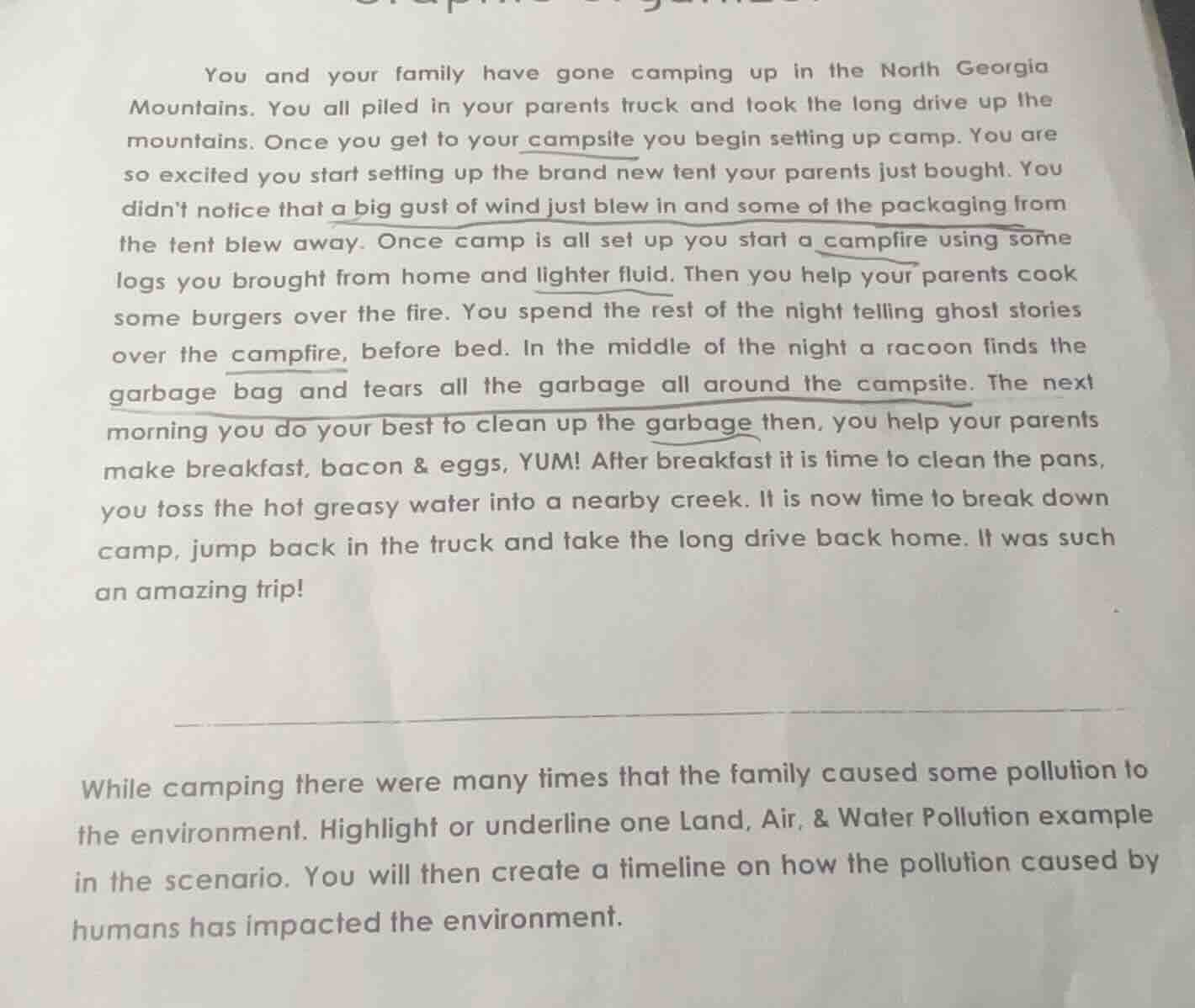
you and your family have gone camping up in the north georgia mountains. you all piled in your parents truck and took the long drive up the mountains. once you get to your campsite you begin setting up camp. you are so excited you start setting up the brand new tent your parents just bought. you didnt notice that a big gust of wind just blew in and some of the packaging from the tent blew away. once camp is all set up you start a campfire using some logs you brought from home and lighter fluid. then you help your parents cook some burgers over the fire. you spend the rest of the night telling ghost stories over the campfire, before bed. in the middle of the night a racoon finds the garbage bag and tears all the garbage all around the campsite. the next morning you do your best to clean up the garbage then, you help your parents make breakfast, bacon & eggs, yum! after breakfast it is time to clean the pans, you toss the hot greasy water into a nearby creek. it is now time to break down camp, jump back in the truck and take the long drive back home. it was such an amazing trip!
while camping there were many times that the family caused some pollution to the environment. highlight or underline one land, air, & water pollution example in the scenario. you will then create a timeline on how the pollution caused by humans has impacted the environment.
- Land Pollution: The raccoon tearing open the garbage bag and scattering trash across the campsite (and the initial leaving of the garbage accessible) counts as land pollution, as waste is left to contaminate the soil and natural area.
- Air Pollution: Starting a campfire using lighter fluid releases harmful chemical fumes and particulate matter into the air, contributing to air pollution.
- Water Pollution: Tossing hot, greasy water into the nearby creek introduces oil, grease, and potentially food waste into the water source, contaminating it for aquatic life and the ecosystem.
Timeline of Human Pollution Impacts:
- 18th-19th Century (Industrial Revolution): Large-scale industrialization leads to widespread air pollution from coal burning, water pollution from unregulated factory waste discharge, and land pollution from mining and industrial waste accumulation.
- Mid-20th Century: Post-WWII boom in manufacturing, agriculture, and consumerism increases chemical runoff from farms (pesticides/fertilizers) into waterways, plastic waste buildup on land and in oceans, and smog from vehicle emissions in urban areas.
- Late 20th Century: Recognition of pollution's long-term harm leads to early regulations, but globalized production spreads plastic waste globally, and greenhouse gas emissions from fossil fuels accelerate climate change (linked to air pollution).
- 21st Century: Plastic pollution reaches crisis levels, with microplastics contaminating all ecosystems (oceans, soil, air, drinking water). Industrial and agricultural runoff creates dead zones in oceans, and air pollution contributes to global warming, extreme weather, and widespread public health issues.
- Current: Ongoing human activities (including unregulated recreational practices like improper camping waste disposal) continue to add incremental pollution, compounding existing ecosystem damage and threatening biodiversity and human health.

Snap & solve any problem in the app
Get step-by-step solutions on Sovi AI
Photo-based solutions with guided steps
Explore more problems and detailed explanations
Pollution Examples from the Scenario:
- Land Pollution: Garbage scattered across the campsite by the raccoon (from the family leaving garbage accessible)
- Air Pollution: Using lighter fluid to start a campfire, releasing fumes
- Water Pollution: Dumping hot, greasy water into the nearby creek
Timeline of Human Pollution Impacts:
- 18th-19th Century: Industrial Revolution brings large-scale air, water, and land pollution from coal, factories, and mining.
- Mid-20th Century: Post-WWII consumerism and industrial growth increase plastic waste, agricultural chemical runoff, and vehicle smog.
- Late 20th Century: Early pollution regulations are introduced, but global plastic waste and greenhouse gas emissions rise.
- 21st Century: Microplastic contamination spreads globally; agricultural runoff creates ocean dead zones; air pollution drives climate change and public health crises.
- Current: Recreational and daily human activities (like improper camping waste) add to cumulative ecosystem damage.