QUESTION IMAGE
Question
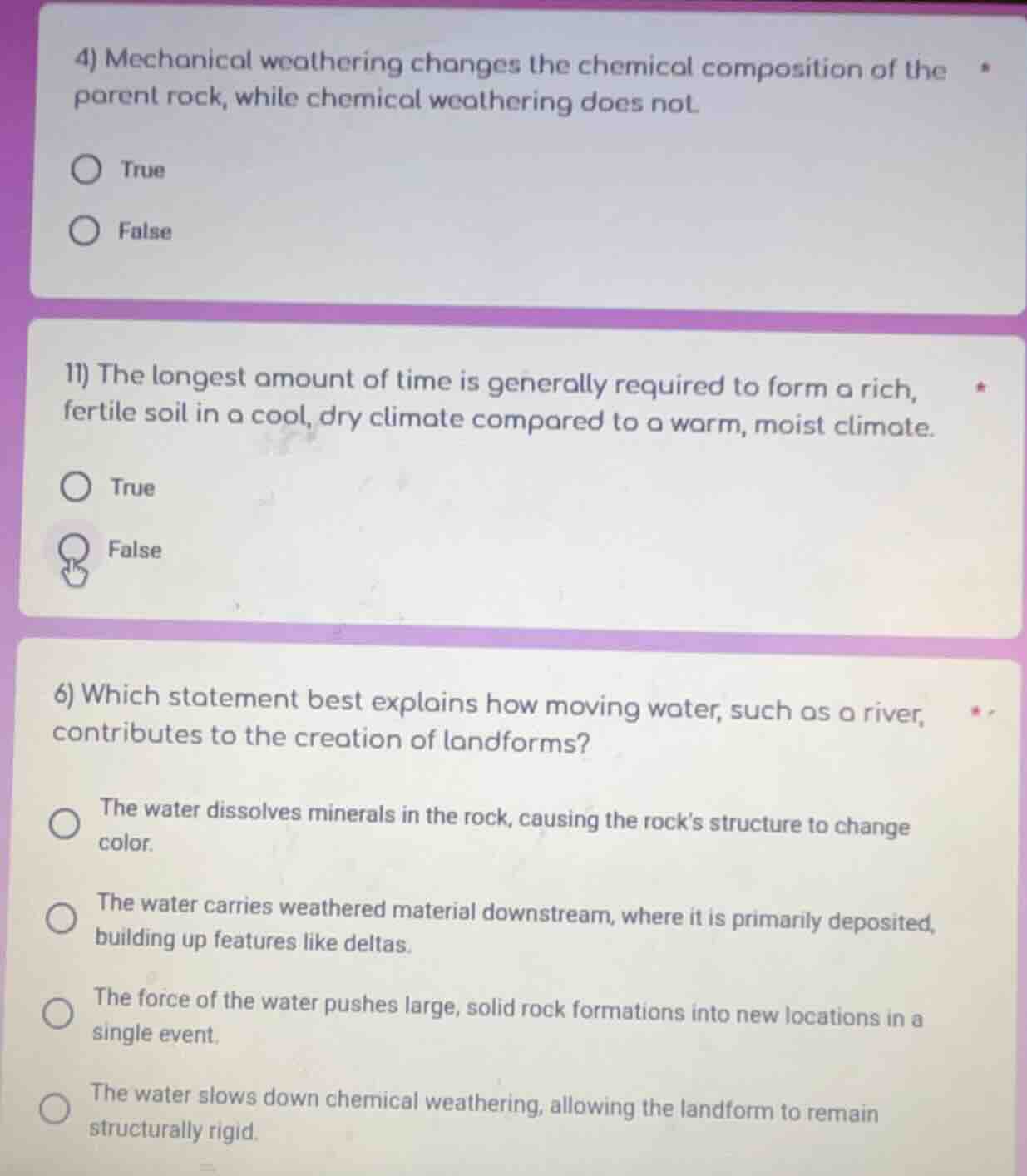
- mechanical weathering changes the chemical composition of the parent rock, while chemical weathering does not.
true
false
- the longest amount of time is generally required to form a rich, fertile soil in a cool, dry climate compared to a warm, moist climate.
true
false
- which statement best explains how moving water, such as a river, contributes to the creation of landforms?
the water dissolves minerals in the rock, causing the rocks structure to change color.
the water carries weathered material downstream, where it is primarily deposited, building up features like deltas.
the force of the water pushes large, solid rock formations into new locations in a single event.
the water slows down chemical weathering, allowing the landform to remain structurally rigid.
Brief Explanations
- For question 4: Mechanical weathering breaks rock into smaller pieces without altering its chemical composition, while chemical weathering changes the rock's chemical makeup. The given statement reverses this fact.
- For question 11: Cool, dry climates slow down weathering and biological activity, which are key to forming rich soil. Warm, moist climates speed these processes, so soil forms faster there, meaning cool dry climates take longer.
- For question 6: Rivers erode weathered material, transport it downstream, and deposit it to build landforms like deltas. Other options are incorrect: water dissolving minerals is chemical weathering (not the main landform creation via movement), rivers don't move large solid rock formations in a single event, and moving water does not slow chemical weathering.

Snap & solve any problem in the app
Get step-by-step solutions on Sovi AI
Photo-based solutions with guided steps
Explore more problems and detailed explanations
- False
- True
- The water carries weathered material downstream, where it is primarily deposited, building up features like deltas.