QUESTION IMAGE
Question
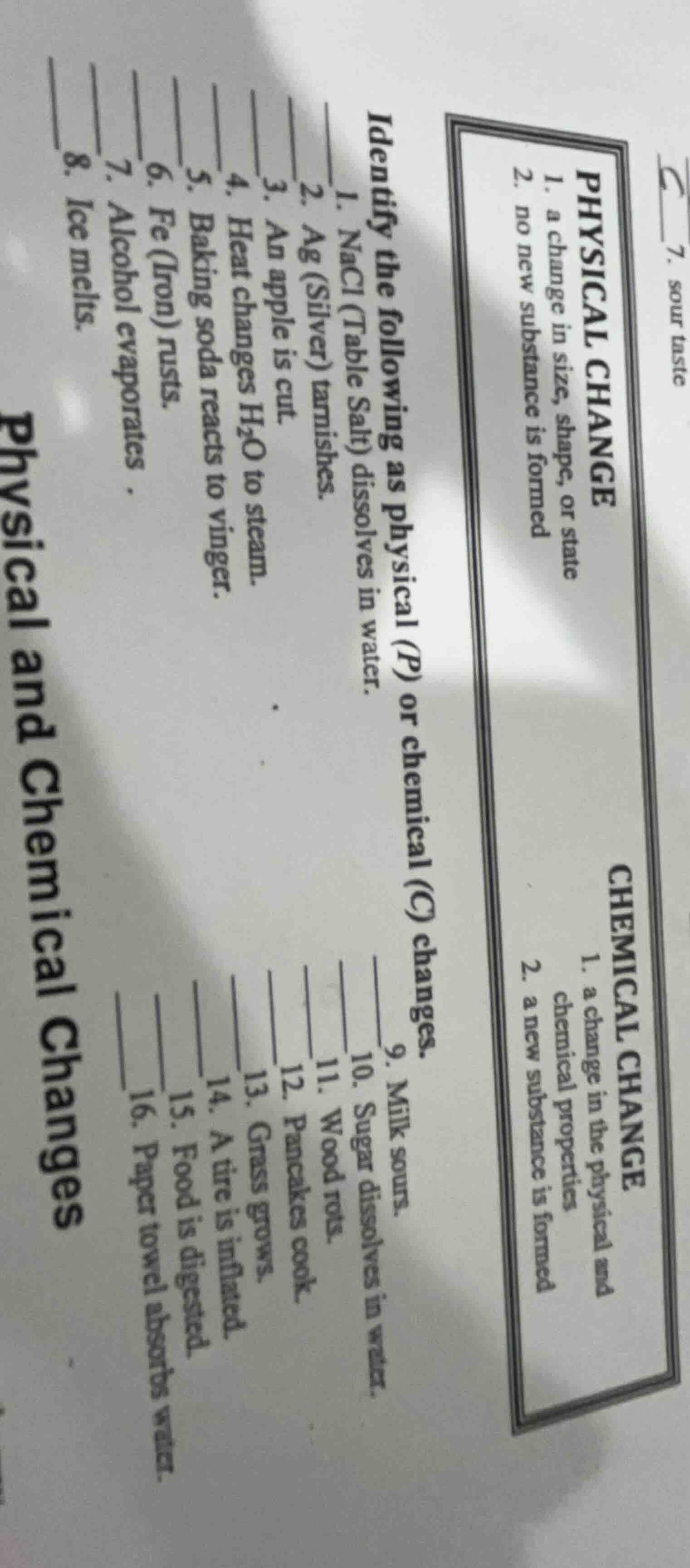
physical change
- a change in size, shape, or state
- no new substance is formed
chemical change
- a change in the physical and chemical properties
- a new substance is formed
identify the following as physical (p) or chemical (c) changes.
- nacl (table salt) dissolves in water.
- ag (silver) tarnishes.
- an apple is cut.
- heat changes h₂o to steam.
- baking soda reacts to vinegar.
- fe (iron) rusts.
- alcohol evaporates.
- ice melts.
- milk sours.
- sugar dissolves in water.
- wood rots.
- pancakes cook.
- grass grows.
- a tire is inflated.
- food is digested.
- paper towel absorbs water.
physical and chemical changes
Response
To solve this, we use the definitions of physical and chemical changes:
- Physical Change (P): Change in size, shape, or state; no new substance formed.
- Chemical Change (C): New substance formed; change in physical/chemical properties.
1. NaCl (Table Salt) dissolves in water.
Step: Check if new substance forms. Dissolving salt is a state change (solid to aqueous), no new substance.

Snap & solve any problem in the app
Get step-by-step solutions on Sovi AI
Photo-based solutions with guided steps
Explore more problems and detailed explanations
P
2. Ag (Silver) tarnishes.
Step: Tarnishing forms silver sulfide (new substance).