QUESTION IMAGE
Question
question 9
1 pts
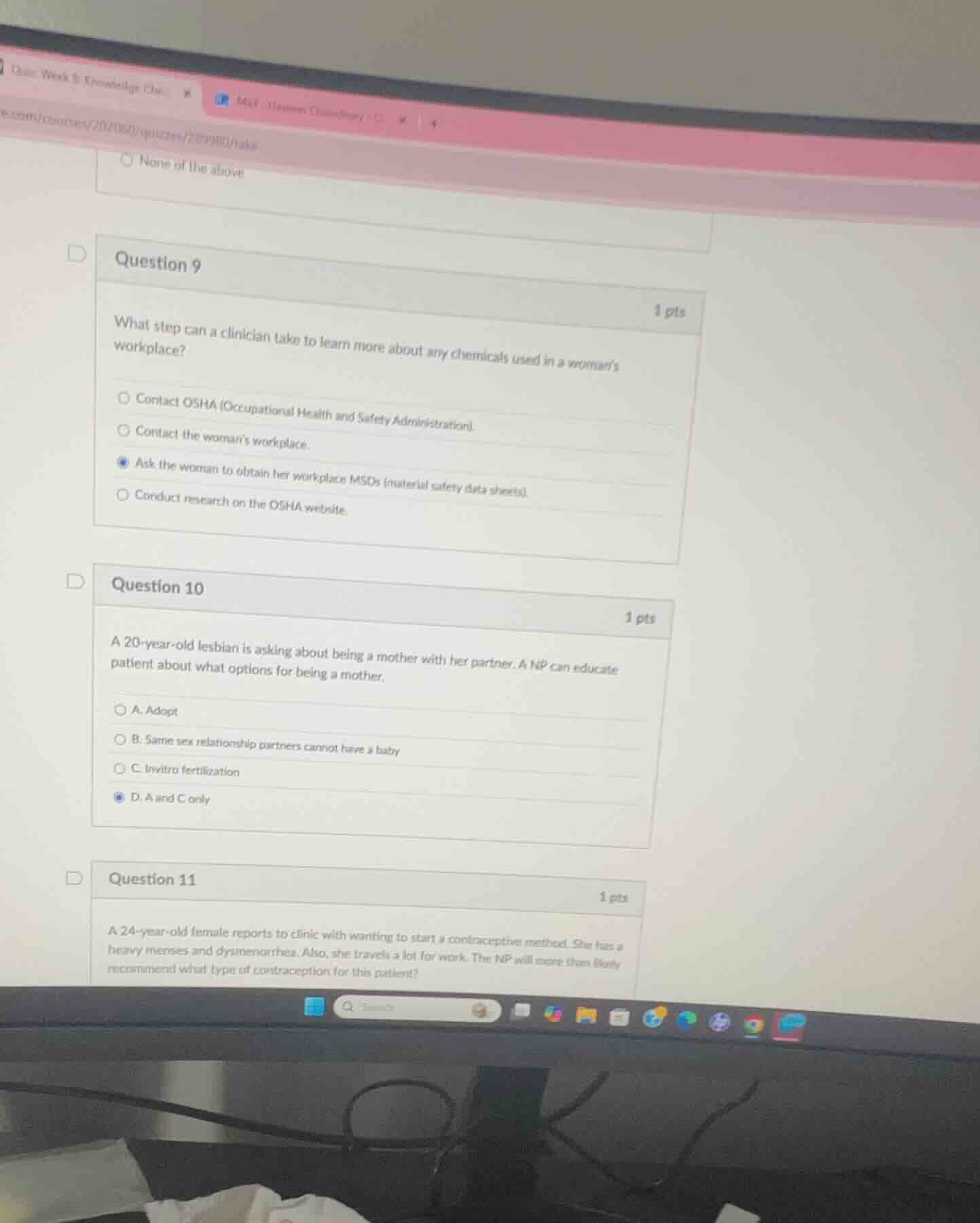
what step can a clinician take to learn more about any chemicals used in a womans workplace?
contact osha (occupational health and safety administration).
contact the womans workplace.
ask the woman to obtain her workplace msds (material safety data sheets).
conduct research on the osha website.
question 10
1 pts
a 20 - year - old lesbian is asking about being a mother with her partner. a np can educate patient about what options for being a mother.
a. adopt
b. same sex relationship partners cannot have a baby
c. in vitro fertilization
d. a and c only
question 11
1 pts
a 24 - year - old female reports to clinic with wanting to start a contraceptive method. she has a heavy menses and dysmenorrhea. also, she travels a lot for work. the np will more than likely recommend what type of contraception for this patient?
Question 9:
Material Safety Data Sheets (MSDS) are standardized documents that detail workplace chemical hazards, composition, and safety information. Having the patient obtain these directly from her workplace is the most targeted way for a clinician to get specific details about the chemicals she is exposed to.
Question 10:
Lesbian couples have multiple pathways to parenthood. Adoption is a valid legal option, and in vitro fertilization (using donor sperm or other assisted reproductive techniques) is also a common method. The claim that same-sex couples cannot have a baby is incorrect.
Question 11:
A long-acting reversible contraceptive (LARC) like a hormonal intrauterine device (IUD) is ideal here. It reduces heavy menstrual bleeding and dysmenorrhea, and it is low-maintenance, which fits with the patient's frequent work travel (no need to remember daily pills or frequent appointments).

Snap & solve any problem in the app
Get step-by-step solutions on Sovi AI
Photo-based solutions with guided steps
Explore more problems and detailed explanations
Question 9: Ask the woman to obtain her workplace MSDs (material safety data sheets).
Question 10: D. A and C only
Question 11: A hormonal intrauterine device (IUD) (or another long-acting reversible contraceptive like an implant, as it addresses heavy periods, dysmenorrhea, and travel-related convenience)