QUESTION IMAGE
Question
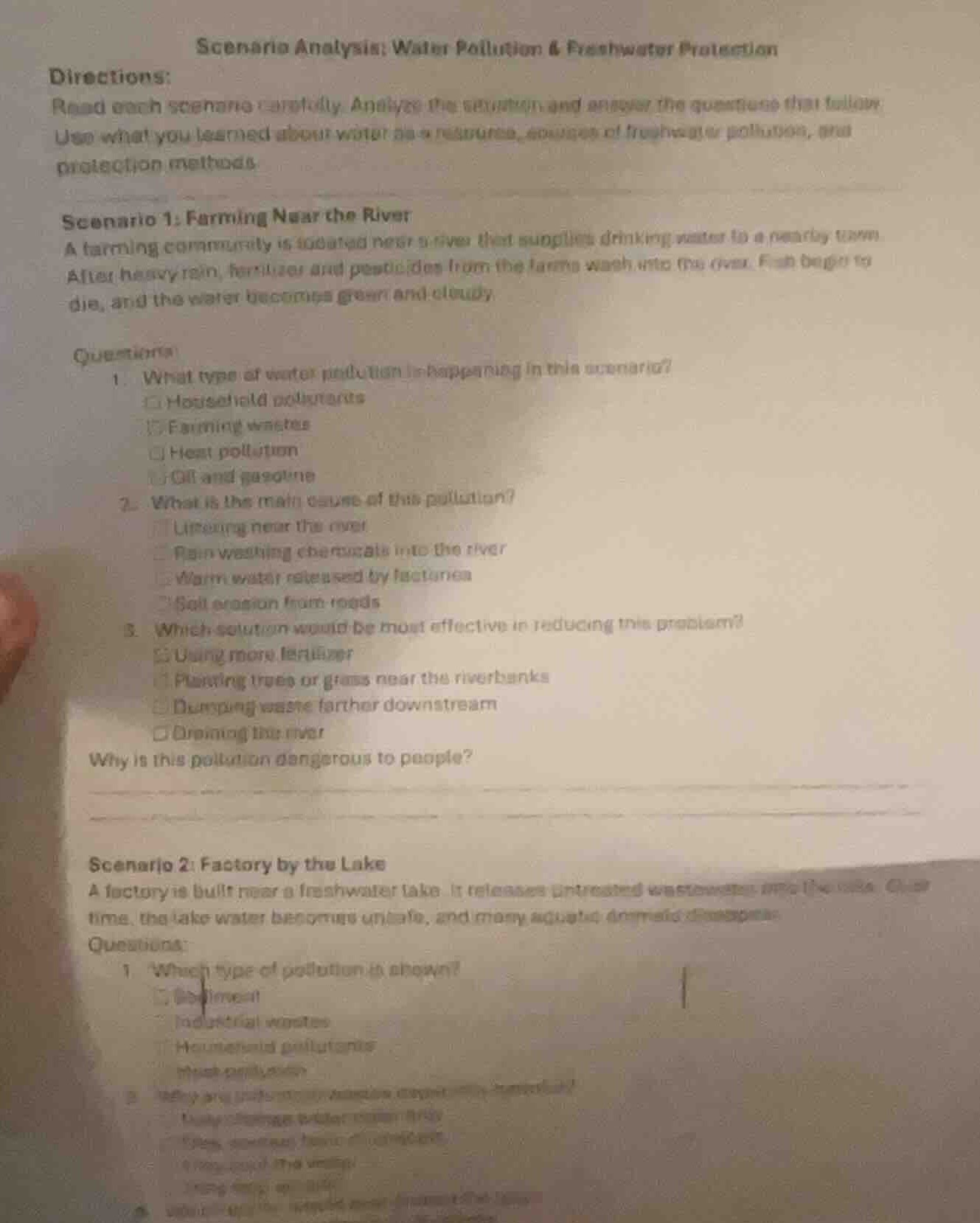
scenario analysis: water pollution & freshwater protection
directions:
read each scenario carefully. analyze the situation and answer the questions that follow. use what you learned about water as a resource, sources of freshwater pollution, and protection methods.
scenario 1: farming near the river
a farming community is located near a river that supplies drinking water to a nearby town. after heavy rain, fertilizer and pesticides from the farms wash into the river. fish begin to die, and the water becomes green and cloudy.
questions:
- what type of water pollution is happening in this scenario?
□ household pollutants
□ farming wastes
□ heat pollution
□ oil and gasoline
- what is the main cause of this pollution?
□ littering near the river
□ rain washing chemicals into the river
□ warm water released by factories
□ soil erosion from roads
- which solution would be most effective in reducing this problem?
□ using more fertilizer
□ planting trees or grass near the riverbanks
□ dumping waste farther downstream
□ draining the river
why is this pollution dangerous to people?
_____________________________________________________________________
_____________________________________________________________________
scenario 2: factory by the lake
a factory is built near a freshwater lake. it releases untreated wastewater into the lake. over time, the lake water becomes unsafe, and many aquatic animals disappear.
questions:
- which type of pollution is shown?
□ sediment
□ industrial wastes
□ household pollutants
□ noise pollution
- why are pollution and habitat destruction a concern?
□ water changes color and looks dirty
□ they can harm living organisms
□ it may speed up river currents
□ using more pesticides
- which of the following would most improve the lake?
Scenario 1: Farming Near the River
Question 1
The scenario involves a farming community where fertilizer and pesticides (farming wastes) wash into the river. Household pollutants are from homes, heat pollution is related to temperature changes, and oil/gasoline is from vehicles, so farming wastes is correct.
After heavy rain, chemicals (fertilizer, pesticides) from farms are washed into the river. Littering, factory warm water, and soil from roads don't match the scenario.
Planting trees/grass near riverbanks can prevent soil erosion and filter runoff. Using more fertilizer worsens pollution, dumping waste downstream spreads it, and draining the river is not a solution.

Snap & solve any problem in the app
Get step-by-step solutions on Sovi AI
Photo-based solutions with guided steps
Explore more problems and detailed explanations
B. Farming wastes